By René Wadlow
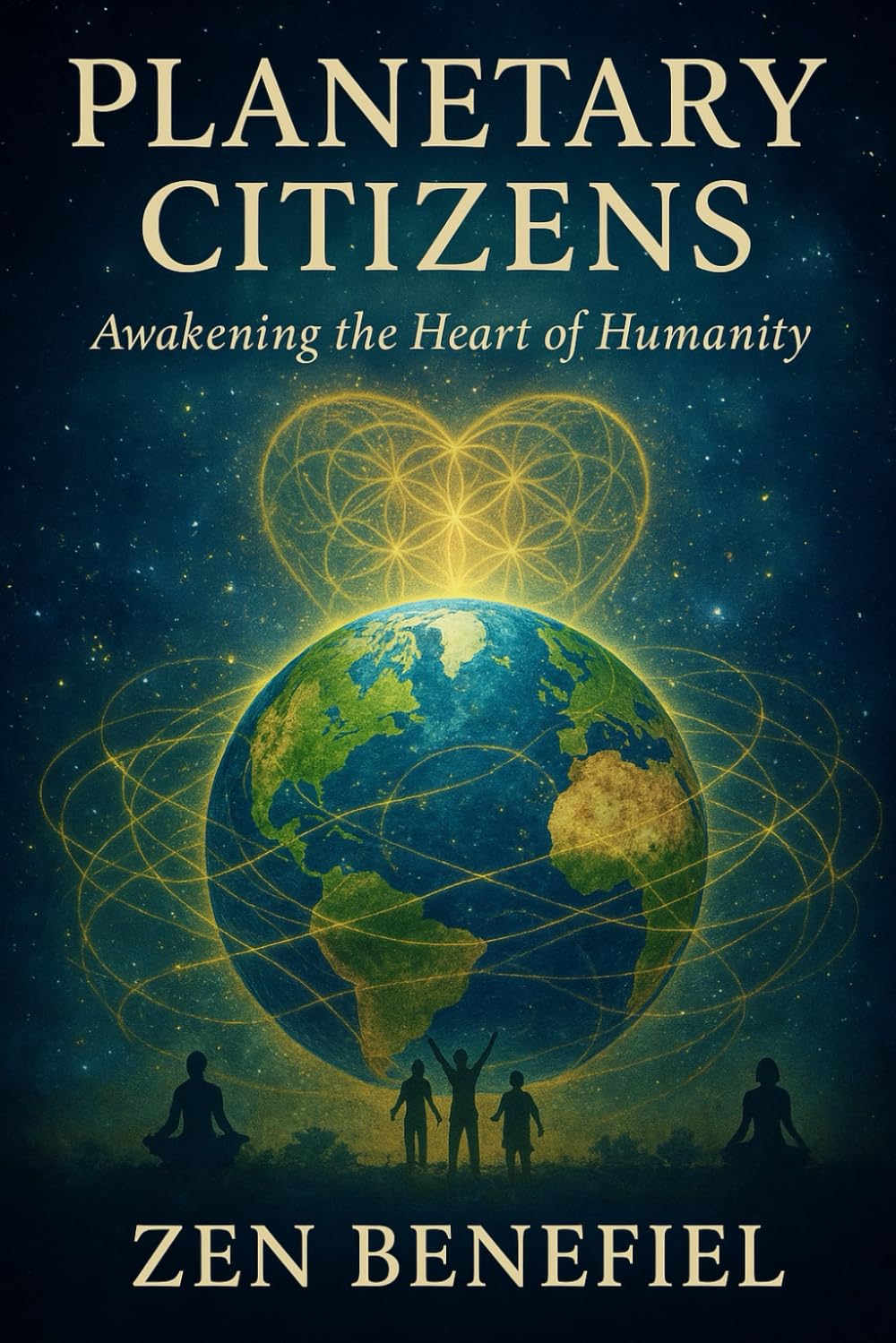
Zen Benefiel, Planetary Citizens: Awakening the Heart of Humanity.
Chandler, AZ: Be The Dream Publishing, 2025, 126pp.
“I believe that the mark of the truly educated and imaginative person facing the twenty-first century is that he feels himself to be a Planetary Citizen.”
U Thant, former Secretary General, United Nations.
The current effort of Planetary Citizens is a reincarnation of a movement led by Donald Keys active from the mid-1970s to the mid-1980s. I was a member of the Planetary Citizens Advisory Board and Donald Keys was the United Nations (UN) editor for Transnational Perspectives, a journal I edited. Thus, Donald Keys and I were in close touch and cooperated on many projects.
The first objective of Planetary Citizens was to help people in as many countries as we could reach to cross the threshold of consciousness from a local and national perspective to the inclusive and global view required in this planetary era.
The office of Planetary Citizens in the Church Center for the UN, was directly across the street from the UN. The Center housed a good number of non-governmental organizations in consultative status with the UN. Thus, the focus of Planetary Citizens was on issues which were discussed at the UN in New York. Cooperation was close with other Nongovernmental Organizations (NGOs) such as the Baha’i UN Office which shared a vision of world unity. Planetary Citizen identity cards were issued to those who requested it and affirmed their responsibility to a just world society. Some 200,000 people joined the effort, 60,000 in Japan.
The major effort of Planetary Citizens was the preparation and then the holding of a major conference held in Toronto, Canada, in June 1983. Some 500 people gathered to draft the “Declaration on the World We Choose” facing the challenges of a world with violence, human rights violations and persistent poverty. The Declaration identified three aims:
1) Self-Realization: The opportunity for achieving the individual human potential and realizing the essential spiritual identity of each person giving rise to oneness with all life, the assumption of responsibility and initiative in a spirit of cooperation.
2) Human Community: There is a natural progression from self-realization to the creation of vibrant communities capable of demonstrating cooperation and stewardship.
3) A United World: A cooperative world order characterized by membership in the family of humanity and by global governance based on justice. A result will be true international security.
Unfortunately, soon after the Toronto Conference, Donald Keys became ill and was unable to continue in a leadership role. As with many NGOs, too much responsibility rested on one person. When he/she is no longer there, the organization becomes weak and can shut down. This is what took place with the first incarnation of Planetary Citizens. All its papers and reports are now in the Peace Library of Swarthmore College near Philadelphia.
Zen Benefiel has revived much of the thinking and spirit of the original Planetary Citizens. As he notes, “The path ahead is not easy. It will take courage, collaboration, and commitment.” There is a need for bridge-building among the many groups working for the well-being of the Earth. There is a need for new kinds of leadership that feels comfortable with networking and nurtures creativity in others.
We wish the new incarnation all the best in the effort to create a just global society.
Prof. René Wadlow is President of the Association of World Citizens.
 Association of World Citizens